Academia da Língua Portuguesa 2026 Programme
Request a proposalMore than writing, writing well.
Writing is much more than putting words together. Our writing mirrors our thinking and the way we communicate. Improving the way we write is an investment. Can there be good leaders without good followers?
Portuguese without doubts
Mistakes that turn up every day in minutes, e-mails and reports — and the rule that settles them.
From ALP's Instagram #portuguessemduvidas
Does this happen in your company's documents? Request a proposal →
What we do
Six ways to put the Portuguese language to work for your organisation.
Training
Our training is tailored to the individual needs of each client. With a team of highly qualified professionals, we offer courses that build skills and sharpen professional practice.
- Courses tailored to each organisation
- 17 catalogue courses, from expression and writing to customer service and protocol
- In person and on-the-job
- For whole teams or just for managers
Language consultancy
We provide comprehensive language consultancy, helping companies communicate effectively in different languages. Our experience in applied linguistics lets us deliver language solutions that drive business results. Language slips such as «ele interviu, houveram pessoas, á anos atrás» don't just stain our image — they can cost us a good relationship or a good deal in a matter of seconds.
- Diagnosis of the organisation's writing and speaking
- Correcting the most frequent mistakes (“language slips”)
- A house style guide for the company
- Follow-up after the training
Portuguese for foreign executives
Are you a foreign executive looking to build your Portuguese vocabulary, grammar, reading, writing and, above all, speaking? We offer Portuguese courses designed especially for foreign executives. They focus on business vocabulary and the communication skills you need.
- Business vocabulary
- Grammar and writing for everyday use
- Reading and understanding documents
- Speaking in meetings and negotiations
Content creationNew
In this digital age we are bombarded every day by avalanches of information. A full table, but little nourishment. We create engaging, relevant content that helps raise your brand's visibility, reach your target audience and drive your business's growth.
- Texts for websites, social media and newsletters
- Press releases and institutional articles
- Content that raises your brand's visibility
- Content designed for your target audience
Editing and proofreading
Our editing and proofreading services make sure your written communication is clear, concise and error-free. We work with every kind of text, from corporate reports to articles for publication and press-office material.
- Proofreading
- Everyday language
- Technical language
Executive TrainingNew
An exclusive training programme for companies, aimed at building skills in spoken and written communication. It is for every employee who wants to lead larger projects, step into management or advance in their career. Three distinct programmes across three areas of expertise.
- Communicate with success · 56 h
- Writing made simple · 46 h
- Communicate to lead · 48 h
Executive Training
A hands-on approach, with tools and techniques for excellence in spoken and written communication.
56H
Communicate with success
A programme for communicating with precision and projecting credibility.
- Techniques of Portuguese expression16H
- Effective communication14H
- Writing official documents16H
- Portuguese without doubts10H
46H
Writing made simple
A programme of techniques for writing more, and writing better.
- Portuguese without doubts10H
- Writing for the press office14H
- Effective e-mails7H
- Writing made simple15H
48H
Communicate to lead
A programme on effective communication. The word is where action begins.
- Excellence in customer service14H
- Managing work, time and information14H
- Business communication in Portuguese20H
Training courses
Training is a valuable investment made by successful companies.
- Techniques of Portuguese expression32H
- Writing official documents16H
- Refreshing the rules of Portuguese20H
- Business communication in Portuguese20H
- Time management, planning and work organisation14H
- Business etiquette, ethics, protocol and public relations16H
- Writing for the press office – journalistic and creative writing16H
- Presentation techniques / how to speak in public14H
- Administrative techniques and practice14H
- Public relations and business protocol14H
- The power of assertive communication – improving working relationships14H
- Excellent customer and public service14H
- Telephone service and the company's image10H
- Practice in the workplace – on-the-job training35H
- Executive secretarial skills for senior management25H
- Drafting technical opinions and reports25H
- General secretarial skills – document management14H
The trainer
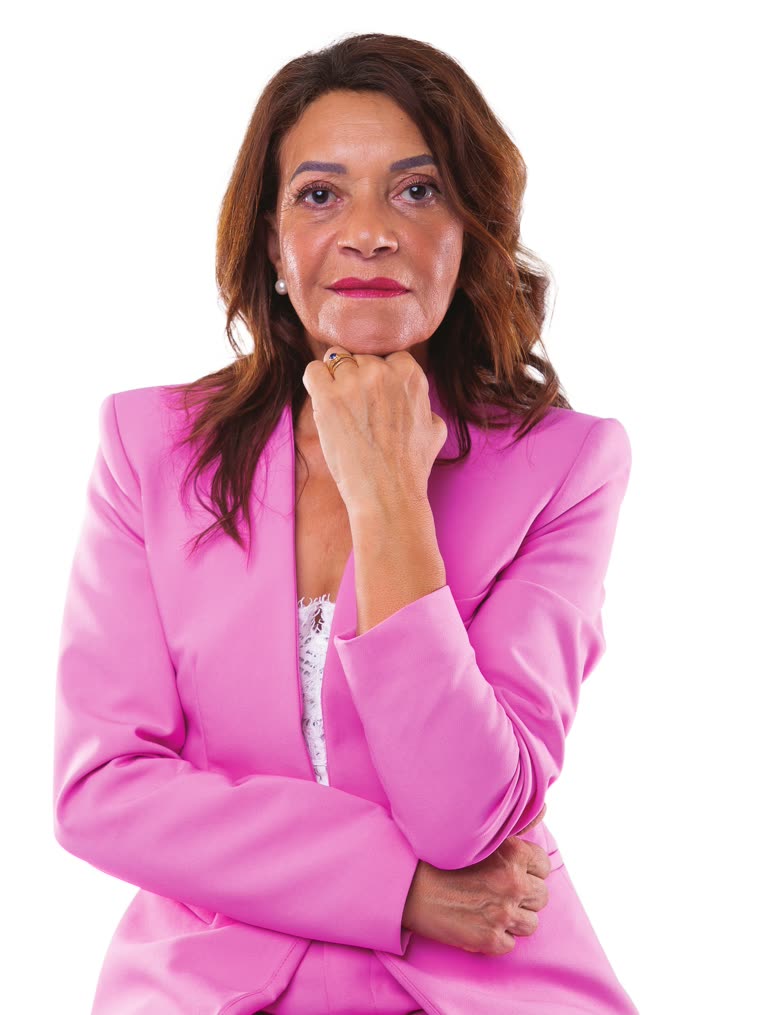
Clara Andrade
- Degree in Modern Languages and Literatures from the University of Coimbra.
- Postgraduate in Education through Art from the Universidade Moderna de Lisboa.
- 35 years of experience as a teacher of Portuguese and French in the state school system in Portugal.
- Teacher of Portuguese and French at the Colégio Português de Kinshasa, in the Democratic Republic of the Congo (DRC).
- Coordinated and took part in the international conferences of Caretakers of the Environment International (CEI 2013/2014, 2014/2015), in Glasgow, Scotland, and Yilan, Taiwan, in partnership with the Portuguese Environment Association (ASPEA).
- Took part in the Programa Língua, run by Portugal's Ministry of Education, in Montpellier, France.
- Taught Portuguese for foreigners at Total, BP and Prezioso Angola, Lda.
- Trainer in Portuguese Language and Behavioural Skills in Angola since 2014.
- More than 10 years of experience as a communication trainer and consultant for a range of companies and institutions in Angola.
What they say about us
During the training I realised I was using many words incorrectly. The course was very interesting and the trainer made it more so. I learned a great deal and I am immensely grateful.
Thorough! She covered specific points that make all the difference in communication — the «crase», the commas. Having solid ground on these questions matters.
This training allowed me to deepen my knowledge of the Portuguese language. Seeing and distinguishing the variants across Portuguese-speaking countries was a genuinely enriching experience. Worth repeating for other audiences.
Wonderful. My gratitude to Professor Clara for everything she taught us. The training was hugely worthwhile and left us wanting to learn much more.
First, congratulations to the trainer on the Customer Service course. It went far beyond my expectations. I will put every technique into practice: communicating effectively, managing stress and delivering excellent service.
Very positive. It is an important tool for becoming a successful professional.
Our clients
Ministries, public institutions and companies that trusted their communication to ALP.






















Shall we work together?
Tell us how many people you want to train and in which area. We will prepare a proposal built around your team.